


Therapy for Feeling Touched Out and Overstimulated in Los Angeles and California
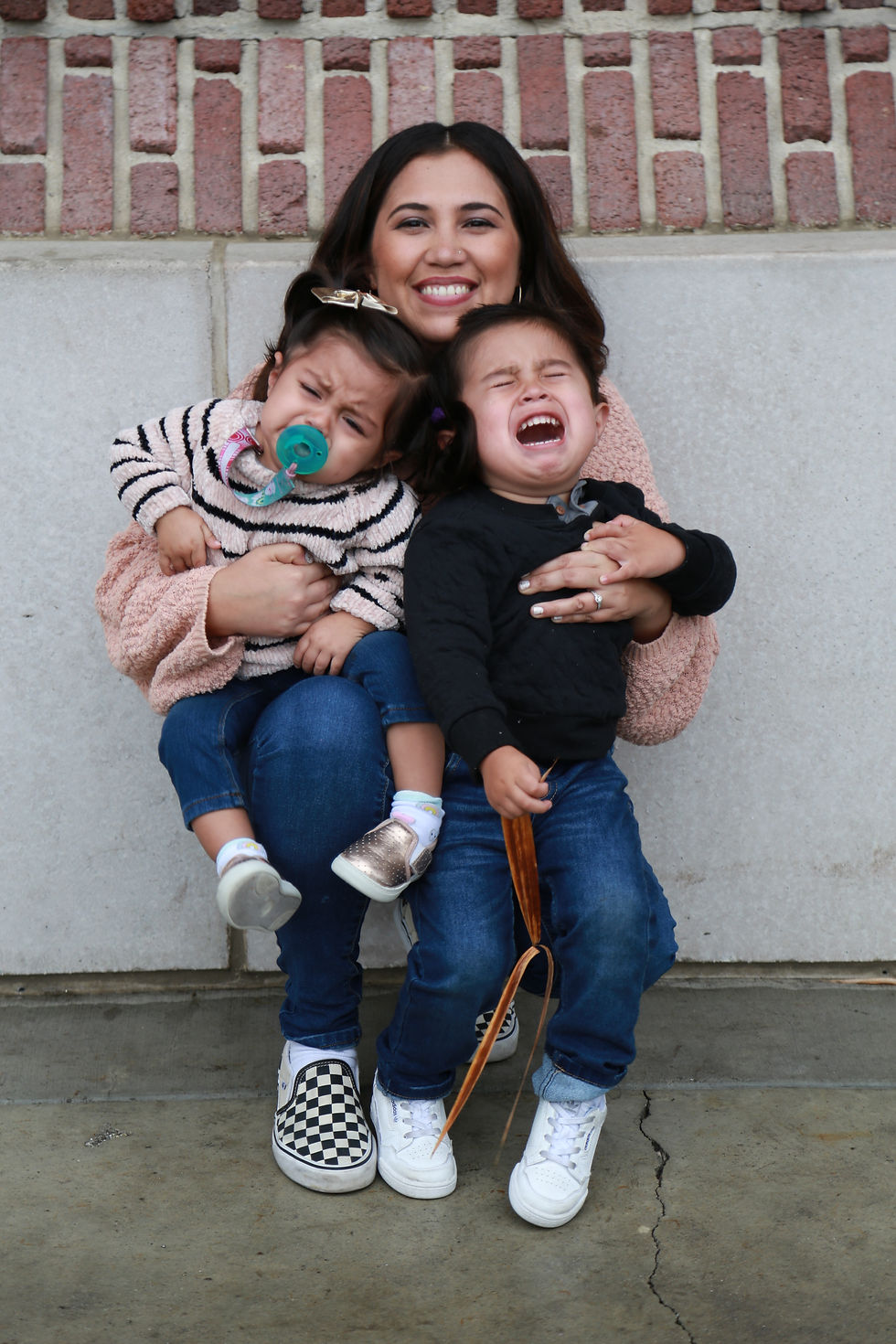
Your toddler climbs into your lap and something in you recoils before you can stop it. You let her stay. You put a hand on her back and count the seconds until she gets bored and moves.
Later your partner reaches for you on the couch and you go rigid, and they notice, and neither of you says anything about it. You lie there afterward doing the math on how many hours it's been since a single moment of the day belonged to your own body.

I work with mothers across Los Angeles and California who have run out of skin. The love is intact. The love is usually the reason they haven't told anyone. What's happened is that the physical and sensory demand of the day has exceeded what a nervous system can absorb, and the body has started refusing before the mind gets a vote.


What being touched out actually is
There's a name for this, and it surprises most of the women who find it: sensory overload. A real, describable state. Not a personality failing, and not a sign that you're cold.
It builds. Nursing or bottle-feeding around the clock. A child on your hip while you cook. Someone's hand in your hair, someone's foot in your ribs at four in the morning, a body pressed against you for most of the hours you're awake and a fair number of the ones you aren't. Add the noise: the whining, the TV, the toy that sings, two of them talking at you at once. Then add the constant low-grade demand of being the person everyone comes to.
By the end of the day your system is saturated. Saturation feels like irritation, or claustrophobia, or a hard bright flare of do not touch me that comes out sharper than you meant it to.
The shower is the only place nobody can reach you. That's why you take long ones.
When your child's sensory needs and yours collide
There's a version of this that gets almost no attention, and it's the one I see most.
Some children are sensory seekers. They need contact, pressure, motion, noise; it's how their nervous system stays organized. They hang off you. They climb. They talk continuously. None of it is aimed at you, and all of it lands on you.
And if you're a parent whose own system runs sensitive, the two of you are in a bind that isn't anybody's fault. Your child's regulation strategy is the exact thing that dysregulates you. You spend the day being used as equipment, then feel monstrous for wanting it to stop, and the guilt takes whatever energy the touching didn't.
This is the intersection I know best. I work with parents of neurodivergent and sensory-seeking children, and I've lived the version where the thing your child needs from you is the thing you have least of.
There's no framing of that which makes it easy. There are, however, ways to build in recovery that don't require your child to need less.

It isn't a discipline problem or a marriage problem
Two things tend to happen when a woman is touched out and doesn't have language for it.
Her partner reads the flinching as rejection, and the distance between them starts to compound. And she starts trying to solve it with discipline. She gets stricter about the climbing, the co-sleeping, the constant requests, and sometimes that helps, and often it just adds a fresh layer of guilt to an already full plate.
The actual problem is upstream of both. A saturated nervous system needs unloading, it needs it regularly, and it needs it in a form that's realistically available to a person with small children. That's the work: figuring out what genuine recovery looks like in your particular life, learning to notice saturation before it becomes a flare, and getting language for it that your partner can hear without taking it personally.
I'm a licensed marriage and family therapist and I'm Perinatal Mental Health Certified through Postpartum Support International. I work with women and parents, and a large part of my practice is mothers of neurodivergent children and mothers who are running past their own limit. I use CBT, ACT, psychodynamic work, EMDR, and mindfulness-based approaches, fitted to the person rather than applied to them.
Frequently asked questions mothers ask me
Does this mean I don't love my children?
No. Feeling touched out is a sensory state, and sensory states don't take instruction from your feelings about your children. Most of the women I see who describe this are deeply attached, highly attuned parents, which is part of why they're depleted. The recoil is a body reporting that it's full.
Is this just burnout?
They overlap and they're not identical. Burnout is depletion across the whole system: motivation, energy, meaning. Being touched out is specifically physical and sensory, and it can show up in a woman who otherwise feels fine about her life. Plenty of people have both, and it's worth knowing which one is driving on a given day, because they respond to different things.
My partner takes it personally and I don't know how to explain it.
This comes up constantly. Part of what we do is build language for it that's accurate and doesn't land as an accusation — something you can say at seven in the evening that gets you what you need without starting a conversation neither of you has the energy for.
I wonder whether I'm neurodivergent myself.
A lot of women arrive at that question through exactly this door, often after a child has been assessed. I don't do diagnostic testing, and I'd refer you out for that if you wanted it. What I can do is work with how your particular nervous system operates, which is useful regardless of whether anyone ever puts a label on it.

This work isn’t just about coping, it’s about change.
empower
your

next
chapter
You don't have to feel alone as a new parent
If you've been managing this by taking longer showers and not mentioning it, there's more available to you than that.
Book a free consultation with me. We'll talk about what your days actually look like, where the saturation is coming from, and whether this feels like the right fit.